
SMART 2.0.0.13 – January 19th 2026
🐛 Fixed Bugs
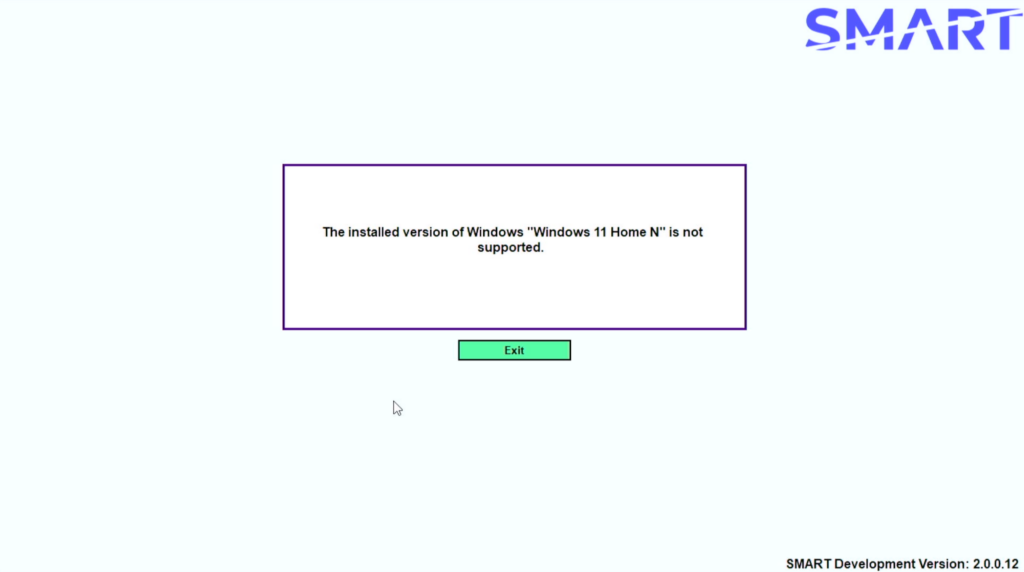
- Fixed issue where it would say invalid auth.txt when trying to run SMART on a Windows version that isn’t supported.
SMART 2.0.0.12 – January 16th 2026
📋 What’s New
- Config.json now optional If you’re using a standard setup, you won’t need the config.json file and SMART will default to looking for auth.txt. Only use config.json when you need to override settings or configure SMART to connect to a Wi-Fi profile on startup.
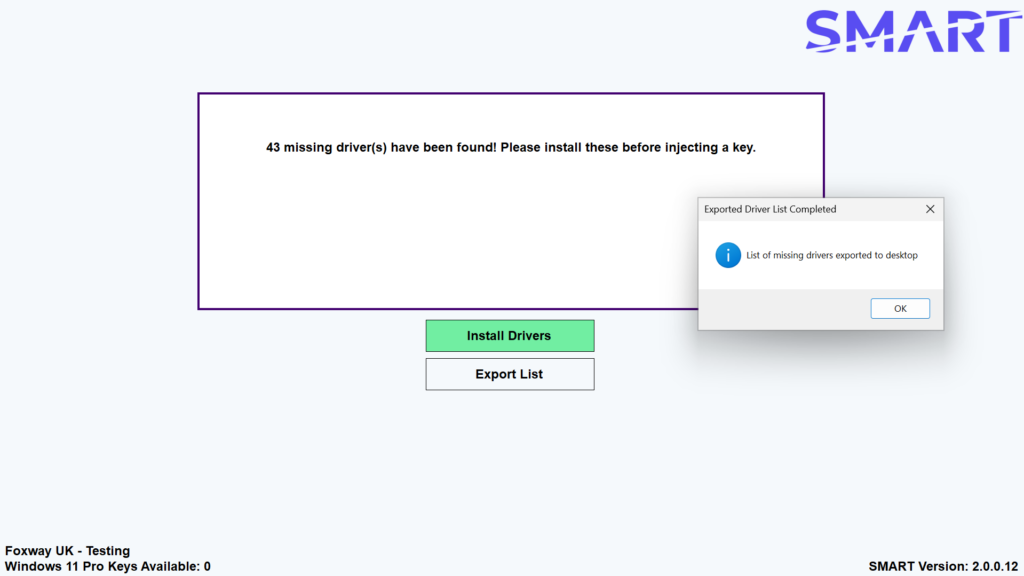
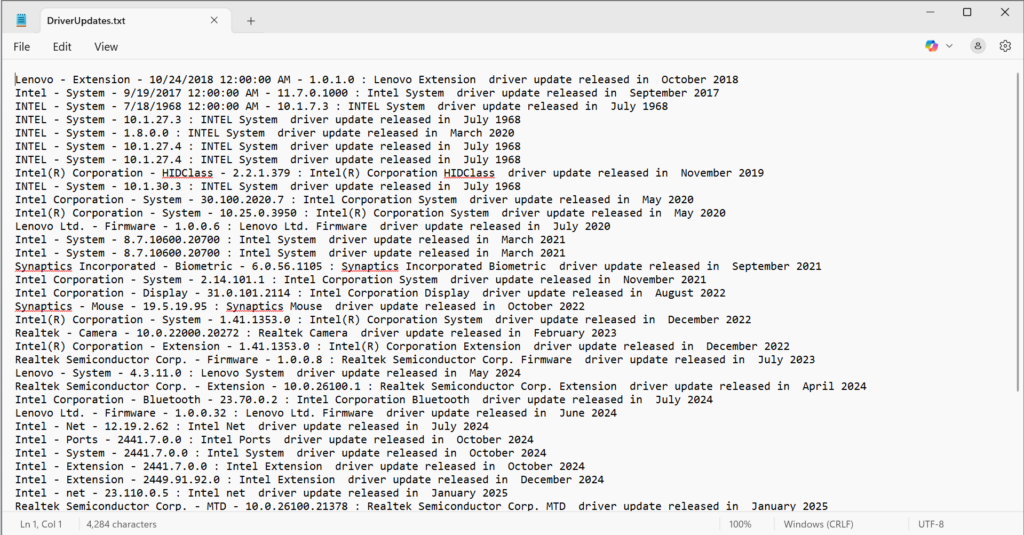
- Driver Report Export You can now export a .txt file listing all missing or outdated drivers straight to the desktop – perfect for auditing or offline troubleshooting.
- ARM Device Support SMART now includes support for ARM-based devices.
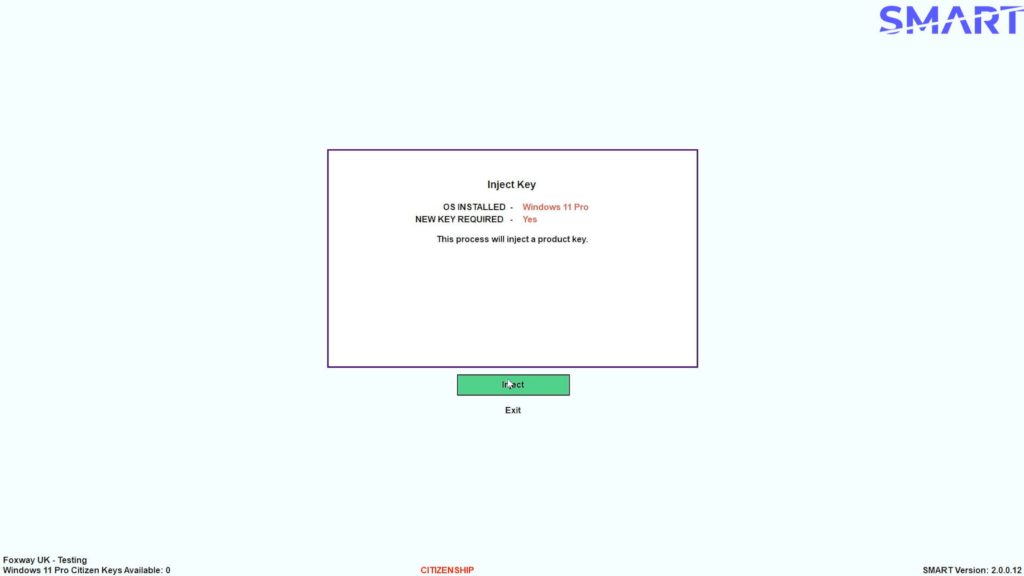
- Citizenship Mode Visibility When injecting a Citizenship key, SMART now clearly shows CITIZENSHIP in bold red text at the bottom of the interface.
🐛 Fixed Bugs
- Citizenship override in config.json wasn’t applying properly – now resolved.
- Relaunching SMART after driver install restart now works more reliably.
- SMART Shield improvements to reduce issues when reusing a previously injected key.
- SMART Sysprep Shutdown/Restart now triggers correctly, rather than always shutting down.
🛠 Notes & Recommendations
- Using config.json is now optional unless you’re applying custom logic or overrides. For most users, auth.txt and SMART.exe is all you need.
- Driver export is useful if you’re on PAYG and need a record of missing drivers before continuing.
- ARM support is early-stage: Let us know if you’re testing on ARM hardware and run into issues.
SMART 2.0.0.10 – October 2025
📋 What’s New
- Introduced Skip Driver Installer option
- For paid plan users who prefer to manage drivers manually
- Disables the automatic SMART driver installation phase
🐛 Fixed Bugs
- Fixed issue with SysPrep still trying to run outside of Audit Mode
🛠 Notes & Recommendations
- Only for paid tiers: If you’re on our Pay As You Go plan, this option won’t be available in your settings.
- Validate driver presence: Skip installing drivers only when you have a reliable driver deployment method ready, or you risk shipping out devices with missing drivers.
SMART 2.0.0.9 – August 2025
Highlights:
- 🚀 Driver Boost: Multi-threaded driver installation (Faster driver download/install)
- 🧩 Friendlier Error Logging: Clearly shows config/auth errors
- ⚠️ Autopilot Local Profile Detection: Warns if PII is still on the device before resale
🚀 Introducing SMART 2.0.0.9: Driver Boost, Better Logs & Autopilot Warnings that Actually Matter
The latest SMART update is here, and it’s a big one.
SMART 2.0.0.9 introduces Driver Boost, our powerful new multi-threaded driver installation engine, Friendlier Error Logging that tells you exactly what went wrong and why, and a critical new Autopilot Local Profile Detection system that helps you catch hidden profile locks before they become a GDPR disaster.
🔧 DRIVER BOOST Technology
Multi-threaded driver installation
Gone are the days of downloading and installing drivers one-by-one. SMART 2.0.0.9 introduces Driver Boost, our new multi-threaded engine that downloads and installs multiple drivers simultaneously.
What this means for your team:
- Drastically reduced deployment time
- Seamless experience for large batches of devices
- Fewer bottlenecks and better throughput
Behind the scenes, we’ve rebuilt the driver engine to utilise parallel downloads and installations, so your techs aren’t waiting on slow, serial installs. The result? Faster refurb. Faster sales.
🧩 Friendlier Error Logging
Know what went wrong. Fix it faster.
When something fails during deployment, SMART now makes it crystal clear:
- Missing or malformed config.json? You’ll see it.
- Invalid or missing auth.txt? You’ll know instantly.
- Other critical issues? Explained in plain English.
We’ve made SMART more transparent, so your team can fix problems in seconds, not hours. No more vague errors or mystery failures.
⚠️ Autopilot Local Profile Detection
Catch hidden Autopilot profiles before they cause data breaches
This is a huge one. SMART 2.0.0.9 now checks the local registry for existing Autopilot profiles and warns you immediately at the top of the app if one is detected, before and after key injection.
Why this matters:
Devices that were previously Autopilot-enrolled (e.g., ex-corporate or EDU stock) often retain local profile data such as:
- Email address
- Full name
- Organisation
If these are not removed, your customer may boot up and see someone else’s personal information, which is a serious GDPR risk and a quick way to lose trust.
SMART gives you a clear opportunity to spot and remove this before resale.
🔍 Important Note: Cloud vs Local Lock
This feature only checks for Autopilot profiles stored locally in the registry, it does not confirm cloud enrolment status.
That’s important because:
- A device may have the lock removed from the cloud, but a local profile still exists
- A device may still be locked in the cloud, and a local profile exists
If you inject a key and sysprep a device while a local profile is present, and the buyer powers it on without internet access, the device can’t “call home” to confirm the lock is cleared. It may still show the lock screen, even though the cloud lock is gone.
SMART now warns you in advance, so you can:
- Catch local Autopilot profiles before shipping
- Double-check lock status via the SMART dashboard once the key status changes to Activation Enabled (usually within 4 hours)
This gives your team a crucial second chance to avoid compliance issues and frustrating returns.
🧠 Ready to Try It?
Update to SMART 2.0.0.9 and see the difference — or if you’re not yet using SMART to streamline licensing, driver installs, and lock detection, book a demo and see what you’re missing.